Website Design Services in Multan | Custom, Responsive & Conversion-Focused
Website design organizes information and guides actions through IA, UI, UX, typography and responsive behavior. “What makes a website design effective for a business?” is answered by clarity, usability and action support. Our Website Design Services Multan focus on interface and user decisions. Development belongs to Web Development; campaign pages to Landing Page Design; existing-site improvement to Website Redesign. Design Strategy connects Business Goals, Audience, User Intent, Brand and Conversion Goals; Information Architecture connects Sitemap, Navigation, Content Hierarchy, Page Structure and Internal Relationships. For businesses comparing Web Design Services Multan, Website Design Company Multan, Web Design Company Multan or Web Designer Multan, the key question is clarity and next action. The service suits businesses in Multan and Pakistan needing a responsive interface. Lead Generation is treated as a conversion outcome where relevant.
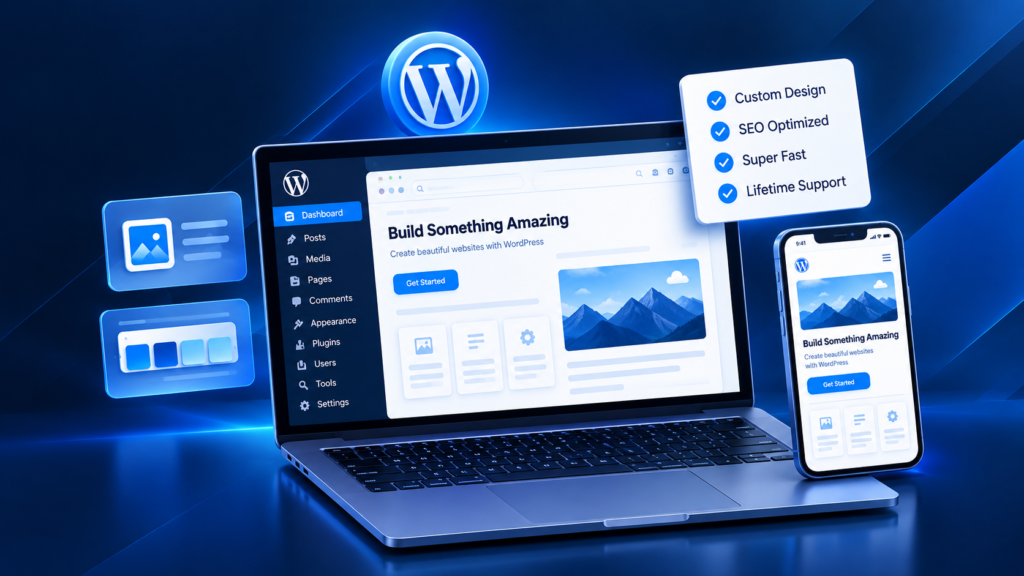
Optimized for speed and security
Looks great on all devices
Built for higher rankings

Website Design Services in Multan
Website Designing Services Multan can cover different website types and design depths based on brand, audience, content and user journey.
Custom Website Design
Custom Website Design Multan starts with the business, audience, content and conversion needs rather than applying a generic template.
Responsive Web Design
Mobile-First Website Design
UI/UX Website Design
Business Website Design
WordPress Website Design
E-commerce Website Design
Conversion-Focused Website Design
SEO-Friendly Website Design
Your Website Design Should Answer Three Questions Before a Visitor Scrolls — UNIQUE
Who Is This Business?
Brand identity and positioning should make the business immediately recognizable.
What Does This Business Offer?
The main service or product should be immediately clear.
What Should the Visitor Do Next?
Your Website Design Should Answer Three Questions Before a Visitor Scrolls — UNIQUE
Who Is This Business?
What Does This Business Offer?
What Should the Visitor Do Next?
We Design the Information Hierarchy Before Decorating the Interface — UNIQUE
Primary Information
Primary information covers business identity, main offer and essential value.
Supporting Information
Decision Information
Why a Website Can Look Professional and Still Fail Users — UNIQUE
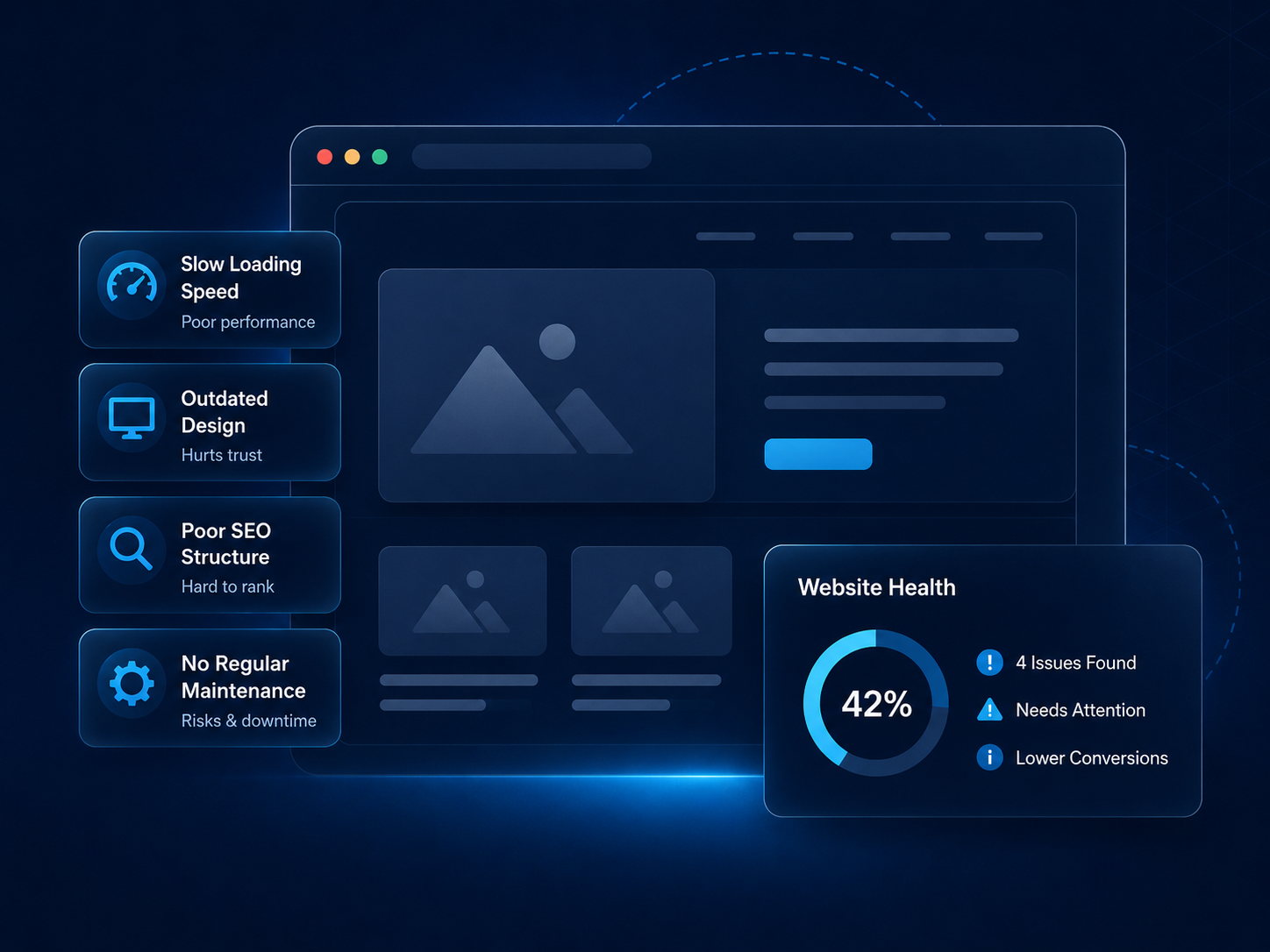
Visitors Cannot Find the Main Service
If the main service is buried, users may leave early.
Navigation Does Not Match User Expectations
Navigation should use predictable labels and logical grouping.
Calls-to-Action Are Buried
A CTA can look attractive yet remain ineffective when buried.
Mobile Layout Is Technically Responsive but Difficult to Use
A layout may resize correctly while still feeling cramped.
Important Content Has Weak Visual Hierarchy
Equal emphasis on every element weakens information hierarchy.
Trust Signals Appear Too Late
Trust signals should appear near relevant decision points.
How We Design for Different Visitor Decisions, Not Just Different Devices — UNIQUE
First-Time Visitor
Needs immediate clarity, relevant context and enough trust to continue.
Returning Visitor
Needs fast navigation to a known service or contact option.
High-Intent Visitor
Needs proof, process, cost context and a visible CTA.
Mobile Visitor
A layout may resize correctly while still feeling cramped.
Mobile Visitor
Needs readable content, accessible touch targets and concise navigation.
Comparison Shopper
Needs differentiators, evidence and easy access to comparison information.
How We Connect Website Design With SEO Without Designing for Search Engines Instead of People — UNIQUE
SEO should inform information architecture while user needs determine the interface, headings, links and mobile usability. Avoid hidden text, keyword-heavy headings, location repetition and visuals that replace meaningful content. Structure should support findability and comprehension.ension.
Custom Website Design
Content Sections
Sections are organized around user questions, proof and services.
Brand-Aligned Visual Direction
Custom Layouts
Typography
Color System
Color should support brand consistency, contrast and clear visual states.
UI/UX Website Design
User Interface Design
User Experience Design
Navigation
Information Architecture
Interaction Patterns
Forms
Feedback States
Error Prevention
Accessibility Considerations
Business Website Design
Service Businesses
Need clear services, proof, process and enquiry paths.
Professional Services
Need credibility, expertise, service context and low-friction contact options.
Local Businesses
Need service/location clarity, calls, directions, messages and trust.
Corporate Websites
Need structured company information, capabilities, departments and stakeholder paths.
Personal Brands
Need positioning, expertise, proof, offers and a strong personal identity.
Small Businesses
Need practical scope, clear services and manageable content without unnecessary complexity.

SEO-Friendly Website Design
Information Architecture
Heading Hierarchy
Internal Linking
Content Visibility
Mobile Usability
Page Structure
Image Context
SEO-Friendly Website Design
10-Step Process — Numbered List / Timeline
Discovery & Business Understanding
Clarify the business model, goals, positioning and project constraints.
Audience & User-Intent Analysis
Identify visitor types, tasks, objections and decision stages.
Content & Information Architecture
Map pages, navigation and content priority before visual styling.
Wireframing
Define layout and hierarchy without relying on final visual decoration.
Visual Direction
Establish typography, color, imagery and interface style.
UI Design
Develop page layouts, components and states.
Responsive Design
Adapt the interface for mobile, tablet and desktop use.
Design Review
Check clarity, consistency, usability and business alignment.
Development Handoff
Prepare specifications and assets for implementation.
Quality Review
Confirm final designs remain coherent across page types and states.
Business Goals
Define what the website should help the business achieve.
Target Audience
Identify who will use the website and what matters to them.
Main Services/Products
Clarify the offers that need visual priority.
Competitors
Provide category context and useful comparison references.
Brand Assets
Share logos, colors, fonts and existing brand guidelines.
Existing Content
Provide current copy, images and content that should be retained or improved.
Preferred References
Reference sites help explain preferences without requiring imitation.
Required Features
List functionality that may affect layout or development feasibility.
Website Design Deliverables
Sitemap / Page Structure
Defines page relationships and core navigation.
Wireframes
Homepage Design
Inner Page Designs
Responsive Layouts
UI Components
Design System / Style Direction
Design Handoff
Website Design vs Website Development
Website Design owns information architecture, layout, UI, UX and responsive journeys. Website Development owns code, CMS, integrations, functionality, performance implementation and security.
| Area | Website Design | Website Development |
|---|---|---|
| Primary focus | Interface, information and user journey | Implementation and functionality |
| Typical outputs | Wireframes, UI layouts, responsive states, design system | CMS, code, integrations, database and working features |
| Main question | How should the website communicate and guide users? | How should the approved experience be built and operated? |
Which e-commerce platform is best for a small business? It depends on catalogue complexity, integrations, management preferences, budget and future plans. Should I use WooCommerce or Shopify for my online store? The answer should come from those requirements, not from an agency preference.
Website Design vs Landing Page Design
How Much Does Website Design Cost in Multan?
How Long Does Website Design Take?
Website Design vs Website Redesign
Our E-commerce Website Development Process
Business and Product Requirements
Platform Selection
Store Architecture and Product Structure
UX/UI Design
Development
Payment and Third-Party Integrations
Testing
Launch
Post-Launch Support
How Much Does an E-commerce Website Cost in Multan?
| Store Type | Typical Scope Drivers |
|---|---|
| Small Store | Focused catalogue, standard product pages, cart, checkout and core setup |
| Growing Store | Larger catalogue, filters, integrations, automation and ongoing operations |
| Custom Store | Special workflows, APIs or custom functionality |
| B2B Store | Accounts, permissions, pricing rules or trade ordering |
Frequently Asked Questions About Website Design
What is website design?
What is the difference between web design and web development?
How much does website design cost in Multan?
How long does it take to design a website?
What is included in professional website design?
What is the difference between web design and landing page design?
Web design covers the broader website experience; landing page design focuses on a specific campaign or conversion goal.
Can you convert the design into WordPress?
Do you design responsive websites?
Do you provide UI/UX website design?
Can you design a WordPress website?
Can you design an e-commerce website?
What is the difference between website design and website redesign?
Can you redesign my existing website?
How do I choose a website design company in Multan?
Compare process, portfolio, UX reasoning, responsive quality, communication and verifiable proof.

Your Go-To Web Developer & SEO Expert in Multan – Let’s Build Your Digital Success Together!
Our Services
All Rights Reserved | Copyright © 2026 | Web Developer in Multan | Owned By Inno Web Sols